Frontier Translational Research Lab
We develop computational methods for drug discovery, clinical AI governance, and genomic epidemiology. Our research connects quantitative modeling with clinical translation to address unmet needs in mitochondrial disease, metabolic health, and precision endocrinology.
Research Programs
Computational Drug Discovery
Governed computational platform for de novo molecule design targeting genetically defined mitochondrial disease. Validation case (MitoCoreX) addresses five priority targets: DRP1, PINK1, Keap1/NFE2L2, NDUFV1, and SDHA. First-in-class molecule designs include a PINK1 G309D selective allosteric activator (PKA-002) and a 271 Da blood-brain-barrier penetrant Keap1 disruptor (KND-002). Ten manuscripts completed, eight under journal review. Five ChemRxiv preprints, ten Zenodo data deposits, Harvard Dataverse dataset published.
Therapeutic Candidate Evaluation Standards
The GeneVector Track is a four-paper thesis series establishing computable standards for therapeutic candidate evaluation. Paper 1 defines the Therapeutic Candidate Decision Record (TCDR) as a minimum information standard. Paper 2 implements a computational scoring engine across seven evaluation dimensions. Paper 3 applies the engine to 20 pipeline candidates and identifies a 0.54 point evidence maturity gap as the universal translational bottleneck. Paper 4 introduces the Evidence Readiness Index (ERI), a budget-constrained optimization framework that specifies which experiments to run, in which order, at what cost, to maximize translational return on investment.
Clinical AI Governance
Research on structural failure modes in clinical AI systems, auditability infrastructure, and governance standards for adaptive learning systems. The Externally Governed Learning Systems (EGLS) framework defines viability constraints for adaptive computation. The AIDD-GOV open standard provides machine-readable schemas for decision records, stage gates, constraint policies, and audit trails in AI-driven drug discovery. Published in JAMIA Open. Academic Editor at PLOS Digital Health.
Evidence Synthesis and Systematic Review
Iron: Friend or Foe (IronFF) is a multi-pool systematic review and meta-analysis program examining iron overload across ten aging-related outcome domains: cellular aging, cardiovascular disease, diabetes mellitus, neurodegeneration, carcinogenesis, male hypogonadism, thyroid dysfunction, bone metabolism, hepatic outcomes, and renal outcomes. Pool 7 (Male Hypogonadism) is submitted to the European Journal of Endocrinology. Pool 6 (Neurodegeneration) is submitted to Frontiers in Genetics. PROSPERO registered (CRD420261344877).
Genomic Epidemiology and Mendelian Randomization
Two-sample Mendelian randomization studies using GTEx eQTLs as instruments and OpenGWAS outcome data. The CYP19A1-ASD study applies Bayesian colocalization (coloc) to evaluate shared causal variants between aromatase expression and autism spectrum disorder risk. Key finding: CYP19A1 has zero eQTL records across all five GTEx v8 brain tissues examined, establishing a null instrument that constrains the aromatase-ASD hypothesis at the tissue-specific level.
Selected Publications
Complete publication list available on ORCID and SSRN Author Page.
Principal Investigator
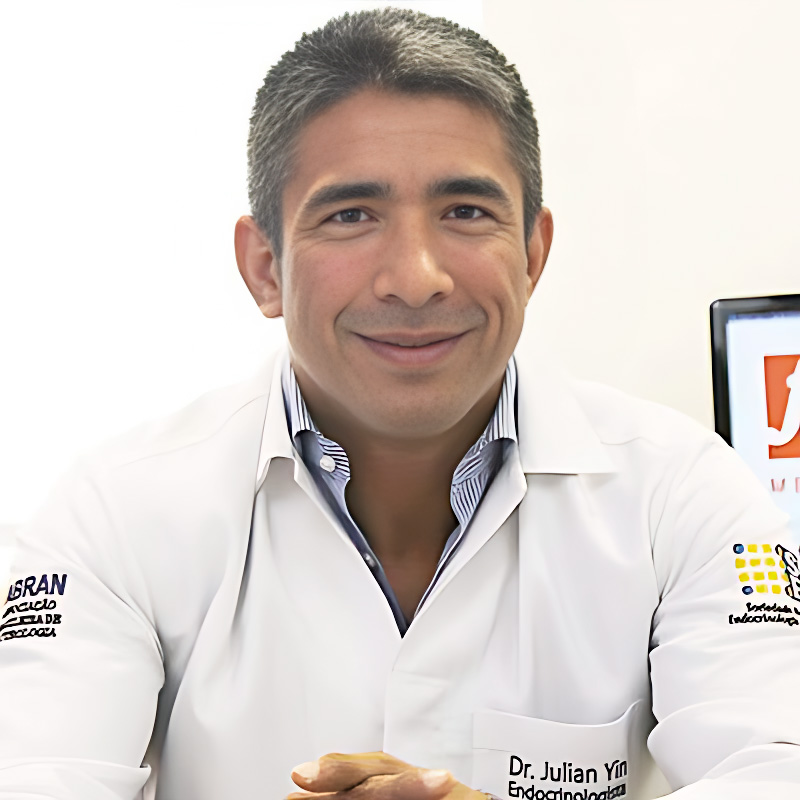
Julian Borges, MD, MS
Physician researcher and board-certified endocrinologist with more than 23 years of clinical and research experience. Training at Harvard Medical School (Global Clinical Scholars Research Training, genetic epidemiology) and Boston University (MS Health Informatics, data analytics). Academic affiliation with the Department of Computer Science at Boston University. Editorial appointments at PLOS Digital Health (Academic Editor) and the International Journal of Epidemiology and Public Health Research (Editor in Chief). Peer reviewer for European Heart Journal, European Journal of Preventive Cardiology, Nature Reviews, and Diabetes and Metabolic Syndrome.
Code and Data
Contact
Email: jyborges@bu.edu
Location: Massachusetts, United States
ORCID: 0009-0001-9929-3135
The lab welcomes inquiries regarding research collaboration, advisory roles, and academic partnerships in computational drug discovery, clinical AI governance, and translational endocrinology.